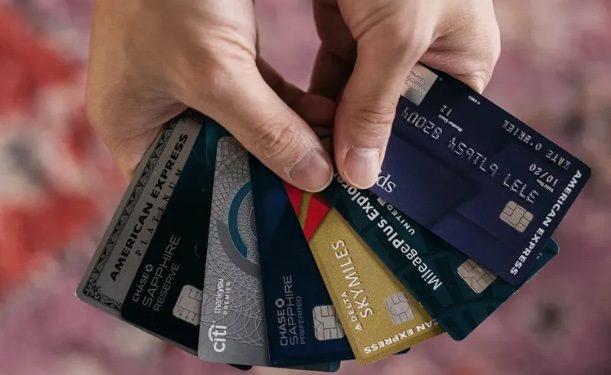
Chase Ultimate Rewards (usually shortened to Chase UR) is arguably the most valuable points currency in travel. That's a big claim, and the rest of this guide is going to back it up — not by selling you a credit card, but by walking through how the program actually works and what it can do once you understand it.
If you're weighing whether the points game is worth your attention, this is the right post to read first. By the end, you'll know why experienced travelers treat Chase UR as the gold standard, how the transfer system works, and what the real-world value of these points looks like. Whether you eventually apply for a Chase card is a separate decision, and one we'll only get to once the explanation is done. If you want the foundational concept of transferable points versus traditional airline miles, our primer on the subject pairs well with what follows.
Why Travel Rewards Points Beat Paying Cash
Before we get to Chase specifically, it helps to understand what makes travel points valuable in the first place. Most people think of credit card rewards as a small percentage back on spending — 2% here, 3% on restaurants, maybe a $200 sign-up bonus. That's a fine way to think about cash-back cards. It's the wrong way to think about transferable travel points. (For a deeper foundation on this — points versus miles versus cash back, what each is actually worth, and how welcome offers and bonus categories fit together — start with our beginner's guide to how credit card rewards actually work.)
A transferable point isn't worth a fixed number of cents. Its value depends entirely on how you use it. The same 75,000 points can buy you $750 of groceries or a business class seat to Europe that retails for $4,000+. The difference isn't magic — it's that airlines and hotels price their award seats and rooms based on their own loyalty program rules, which often have nothing to do with the cash price. When you can move points into those programs at the right moment, you're exploiting the gap between what the airline charges for an award and what the same seat costs in cash.
Chase Ultimate Rewards is one of four major transferable-points ecosystems in the United States (alongside Amex Membership Rewards, Capital One Miles, and Citi ThankYou). Each has strengths and weaknesses. Chase's advantages, which we'll walk through, are that it's the simplest to understand, has the most forgiving structure for beginners, and includes World of Hyatt — the single best hotel transfer partner in the industry, which we break down in our complete World of Hyatt guide.
What Chase Ultimate Rewards Actually Are
Chase UR is a proprietary points currency issued by JPMorgan Chase. You earn UR points on any of the four main Chase personal credit cards — Freedom Flex, Freedom Unlimited, Sapphire Preferred, and Sapphire Reserve — plus a handful of Chase business cards. Points post to your Chase account after each statement closes and don't expire as long as your account stays open.
Here's the important nuance that trips up most beginners: all four cards earn the same UR points, but what you can do with those points depends on which card you hold.
The Freedom cards — earn at 1¢/point on their own
The Freedom Flex and Freedom Unlimited earn UR points with no annual fee. If you only hold one of the Freedom cards and no other Chase card, your points are capped at a 1-cent-per-point value — you can use them for cash back, statement credits, or gift cards, but you cannot transfer them to airline or hotel partners. The Freedom cards are excellent cash-back cards on their own, but they're not the full travel-rewards unlock.
The Sapphire and Ink Preferred cards — unlock the full UR ecosystem
The Sapphire Preferred, Sapphire Reserve, and Ink Business Preferred carry annual fees, but they do something important: they unlock transfer partner access for your entire UR balance. The moment you hold one of these cards alongside a Freedom card, all of your UR points — including the ones you earned on the Freedom — become transferable to Hyatt, United, Aeroplan, Virgin Atlantic, and the other partners at a 1:1 ratio. Same points. Same account. New superpower.
This is why most experienced Chase users hold a Sapphire or Ink Preferred plus one or both Freedom cards — the Freedoms cover bonus categories (5% on rotating quarterly categories for Flex, 1.5% flat for Unlimited), and the Sapphire acts as the key that turns every point earned across the household into a transferable asset.
"All four Chase cards earn the same points. The Sapphire is the key that unlocks what those points can do."

The same points. Different doors. Which card you carry decides which doors open.
What the Points Are Really Worth
The abstract "2–5+ cents per point" figure is a fair summary, but it's forgettable. Real numbers are what make the program click. Let's take a single Sapphire Preferred welcome bonus — 75,000 points, earned after normal spending over three months — and walk through what those points become depending on how you use them.
That $3,000 figure isn't hypothetical. Sixty thousand Aeroplan miles buys a one-way, lie-flat business class seat from the U.S. East Coast to Europe on a Star Alliance airline like Lufthansa or United — a ticket those airlines sell for $4,000 or more in cash. Seventy-five thousand Chase points, transferred 1:1 to Aeroplan, covers that flight with room to spare.
The same 75,000 points, spent through cash back, would not cover a single night at most business-class hotels. The difference isn't effort, isn't risk, isn't luck. It's knowing that the transfer path exists and being willing to spend twenty minutes learning how it works.
The Transfer Partner System
Chase UR transfers to 14 partner programs — 10 airlines and 4 hotels, all at a 1:1 ratio with no minimum transfer fees. That 1:1 simplicity is a bigger deal than it sounds. Amex and Capital One have partners with unfavorable ratios (2:1 or worse on some transfers), which adds math to every decision. Chase keeps it clean: 1,000 Chase points always becomes 1,000 airline miles or hotel points.
Here are the four partners that cover roughly 90% of useful redemptions for most travelers. The other ten have their moments, but you can safely ignore them as a beginner.
The remaining partners — JetBlue, Southwest, Iberia, Aer Lingus, Flying Blue, Singapore KrisFlyer, British Airways, Marriott, IHG, and Wyndham (added to the lineup in late 2025) — each have specific niches. You'll learn them naturally as you plan trips that benefit from them.
One notable absence is American Airlines AAdvantage, which doesn't appear on Chase's list (or Amex's, Citi's, or Capital One's). For travelers who want to book Qatar Qsuites or Japan Airlines First Class, that gap matters — those Oneworld partner sweet spots are some of the best premium-cabin redemptions in the points world. Our AAdvantage 2026 guide covers how to build that balance through the Bilt Mastercard (the only major flexible-rewards card that transfers 1:1 to AA) and pair it alongside your Chase strategy.
How Transfers Actually Work
The mechanics are simpler than most beginners expect. Here's the full sequence:
1. Find the seat or room first. Log into the airline or hotel's website and confirm the award is bookable on your dates. If it's not there, transferring points won't conjure it. Tools like Point.me, Seats.aero, and AwardHacker search availability across multiple programs at once.
2. Link your loyalty account. Inside your Chase UR dashboard under "Transfer Points," select the partner and enter your frequent-flyer number. The name on your Chase account must match the name on your loyalty account exactly — middle initials, suffixes, hyphens all matter.
3. Transfer in 1,000-point increments. Most partners receive the points instantly. Singapore KrisFlyer, JetBlue, and Marriott can take up to 48 hours. Watch for periodic transfer bonuses (20–40% extra) that Chase runs several times a year.
4. Book immediately. Award space can vanish while you're making a sandwich. If you confirmed availability in step one, booking after the transfer lands is usually painless.
One Timely Note — The Hyatt May 2026 Change
In February 2026, Hyatt announced an award chart update taking effect in May 2026. The program is moving from three pricing tiers (Off-Peak, Standard, Peak) to five (Lowest, Low, Moderate, Upper, Top), with peak-tier rooms costing as much as 67% more than today's peak pricing.
Two practical takeaways. First, if you've been sitting on a "someday" Hyatt redemption, consider booking it before May — award cancellations are free, so there's no downside to locking in today's chart. Second, the change makes Chase UR's flexibility more valuable, not less. A transferable currency that can pivot to Aeroplan, Virgin Atlantic, or Flying Blue is exactly the right hedge when any single hotel program gets more expensive.
If You've Decided to Jump In — The 90-Day Playbook
Everything up to this point has been the explanation. If, after reading it, you've decided the points game is worth your time, here's the straightforward four-step plan most experienced travelers would give you.
Check your 5/24 status first
Chase has an unwritten rule — known in the community as 5/24 — that denies applications from anyone who has opened five or more credit cards from any bank in the past 24 months. Most business cards don't count toward the limit, but personal cards from Capital One, Amex, Citi, and others do. If you're new to credit card rewards, apply for Chase cards first, before any non-Chase cards. Getting this order wrong can lock you out of the best ecosystem in the industry for a year or more.
Apply for the Chase Sapphire Preferred
The Chase Sapphire Preferred is the right starter for most people. $95 annual fee, currently offering 75,000 bonus points after $5,000 in spending within the first three months, and — critically — it's the gateway that unlocks transfer partner access for every UR point you earn from this card forward. Not the Freedom (which, without a Sapphire, caps at 1¢). Not the Reserve (whose $795 annual fee is hard to justify until you're actually traveling a lot). The Preferred is the beginner's correct answer.
Hit the welcome bonus with normal spending
Put rent (via a service like Bilt), groceries, gas, dining, streaming subscriptions, and utilities on the card. Don't invent spending you wouldn't otherwise do. Most people hit $5,000 in 60–80 days just by consolidating what's already on their debit card.
Plan one trip and transfer with purpose
Once the bonus posts, search award availability on a route you actually want. When you find a seat, transfer the exact number of points needed and book within minutes. Your first redemption will probably feel like you've discovered a cheat code. That's a fair reaction.
After the first trip — expand the setup
Once you've completed a redemption and understand the flow, this is when the Freedom cards become valuable. Adding a no-fee Freedom Unlimited or Freedom Flex gives you additional bonus categories, and because you already hold the Sapphire, every point earned across both cards is transferable. Our credit card combinations guide walks through the optimal pairings in detail, and the five cards every serious traveler should own covers what comes after that.
The Bottom Line
Chase Ultimate Rewards isn't hype and it isn't a gimmick. It's a genuine asymmetric opportunity that's been hiding in plain sight for more than a decade — and it remains the most beginner-friendly entry point into a hobby that has, over the past ten years, taken us to more than 30 countries almost entirely on points.
The program rewards understanding more than it rewards spending. Learn how the transfer system works, understand which partners matter, and the same 75,000 points that would buy a weekend of groceries can buy a week in Europe in a seat you'd never pay cash for. That's the entire thesis. Everything else is optimization.
If you want a plan tailored to your specific spending, existing cards, and travel goals, a 1-on-1 strategy session skips the trial and error. Most first sessions pay for themselves in the first redemption.
Frequently Asked Questions
Do all Chase credit cards earn Ultimate Rewards?
All four main Chase personal cards — Freedom Flex, Freedom Unlimited, Sapphire Preferred, and Sapphire Reserve — earn UR points, along with Chase's Ink business cards. The difference is that Freedom card points can only be redeemed at 1¢ each unless you also hold a Sapphire or Ink Preferred, which unlocks full transfer partner access for your entire point balance.
What are Chase Ultimate Rewards points worth?
Chase UR points are worth 1 cent each as cash back, up to 1.75 cents through Chase Travel with Points Boost, and 2–5+ cents when transferred to partners like Hyatt, Aeroplan, or Virgin Atlantic. The transfer path is what makes Chase UR the most valuable points currency for most travelers.
How many Chase transfer partners are there in 2026?
Fourteen — 10 airlines and 4 hotels, all at a 1:1 ratio. Hotels: World of Hyatt, Marriott, IHG, and Wyndham (added in late 2025). Airlines: United, Southwest, JetBlue, Aeroplan, Flying Blue, British Airways, Iberia, Aer Lingus, Virgin Atlantic, and Singapore KrisFlyer.
What is the Chase 5/24 rule?
An unwritten Chase policy that denies applications from anyone who has opened 5 or more credit cards from any bank in the past 24 months. Most business cards don't count toward the limit. If you're new to credit card rewards, apply for your Chase cards first, before any non-Chase cards.